
Easy Greek Pasta Salad
This Greek Pasta Salad is a vibrant, fresh, and easy-to-make dish that’s perfect for summer lunches, BBQs, or picnics. Combining tender pasta with crisp vegetables, tangy olives, and creamy feta, it’s dressed in a light olive oil and red wine vinegar dressing that brings everything together beautifully.
Looking for more pasta salad inspiration? Try this High Protein Pasta Salad or tuna pasta salad next.
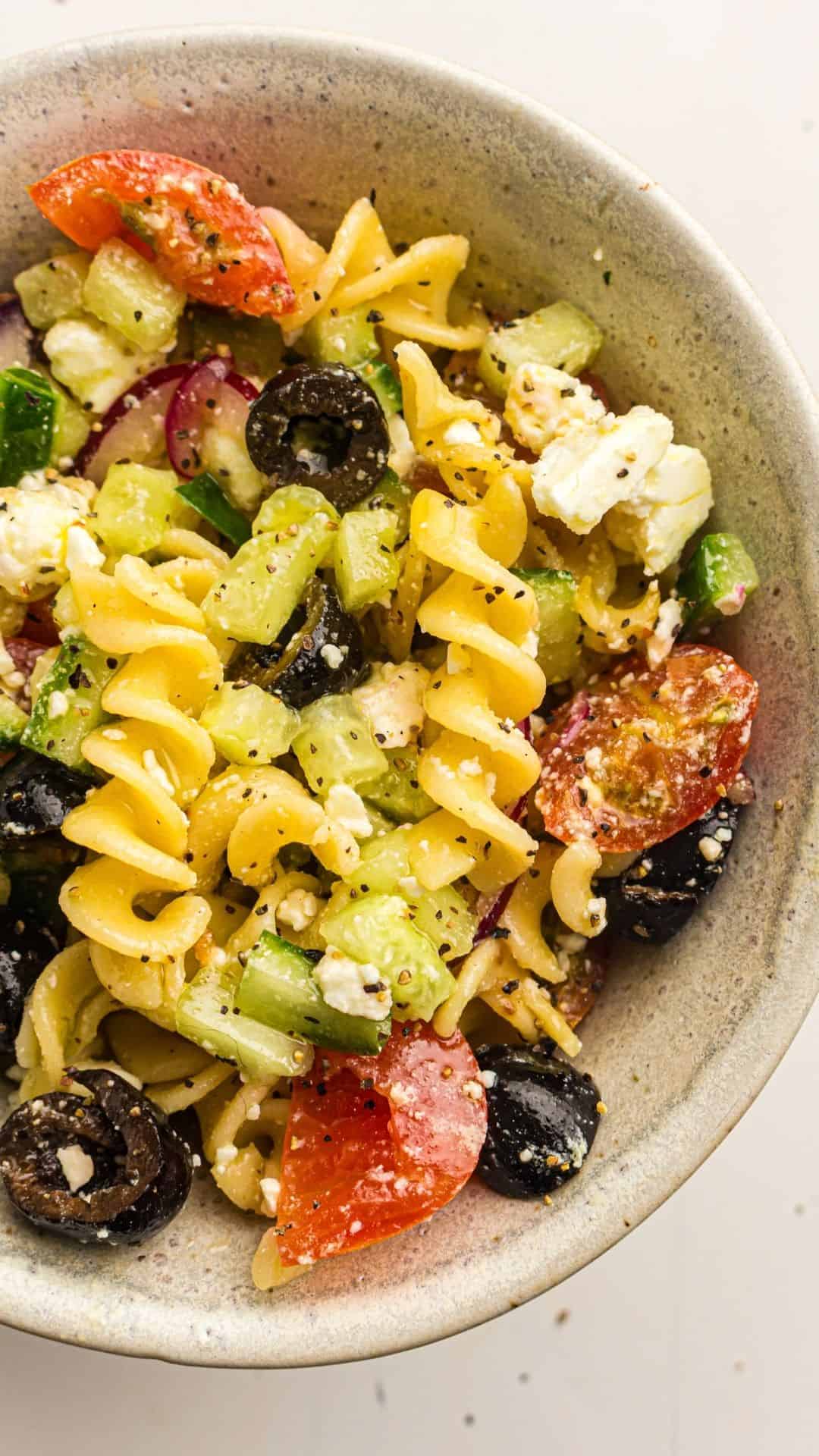
Greek Pasta Salad is my go-to for quick, make-ahead meals! It’s customizable, so you can add your favorite protein, extra veggies, or herbs.
The flavors meld beautifully when chilled, making it a perfect grab-and-go option. This salad is a simple way to add fiber, protein, and fresh vegetables to your meals, keeping you satisfied all afternoon.
What You’ll Love About This Recipe
Recipe Ingredients
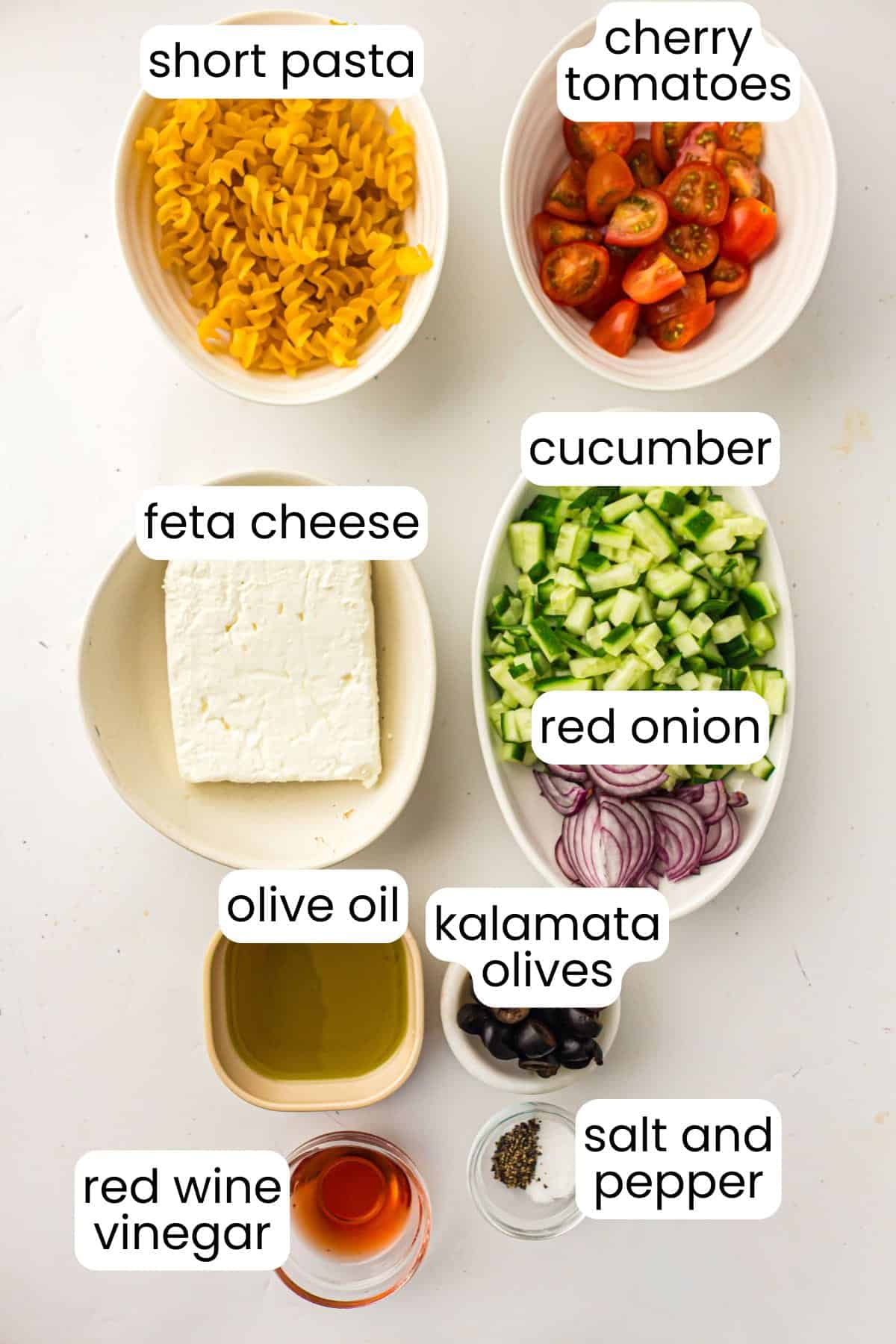
You’ll need the following ingredients to make this Greek Pasta Salad:
Ingredient Notes
Pasta: Use short pasta like rotini or penne. These shapes hold the dressing well and make the salad easy to eat.
Cherry Tomatoes: Halve them for bite-sized freshness and a pop of color.
Cucumber: Dice for a crisp, refreshing crunch. English or regular cucumbers both work well.
Red Onion: Thinly slice for a mild onion flavor. Adjust the amount to your taste if you prefer less sharpness.
Kalamata Olives: Adds tangy depth and Mediterranean flavor. Pit them if needed for easier eating.
Feta Cheese: Crumbled for creaminess and saltiness. Can use dairy-free feta or omit for a vegan version.
Olive Oil: Extra virgin olive oil gives a rich, smooth dressing flavor.
Red Wine Vinegar: Adds a bright, tangy kick to balance the olive oil.
See the recipe card for full information on ingredients and quantities.
Recipe Variations
Swap short pasta shapes: fusilli, farfalle, or penne all work well.
Add grilled chicken, shrimp, or chickpeas for extra protein.
Toss in fresh herbs like parsley, oregano, or basil for a bright flavor.
Use dairy-free feta or omit cheese to make it vegan.
How to Make Greek Pasta Salad: Step by Step
Here are quick visual instructions. Be sure to check out the full instructions with exact ingredients in the printable recipe card below.
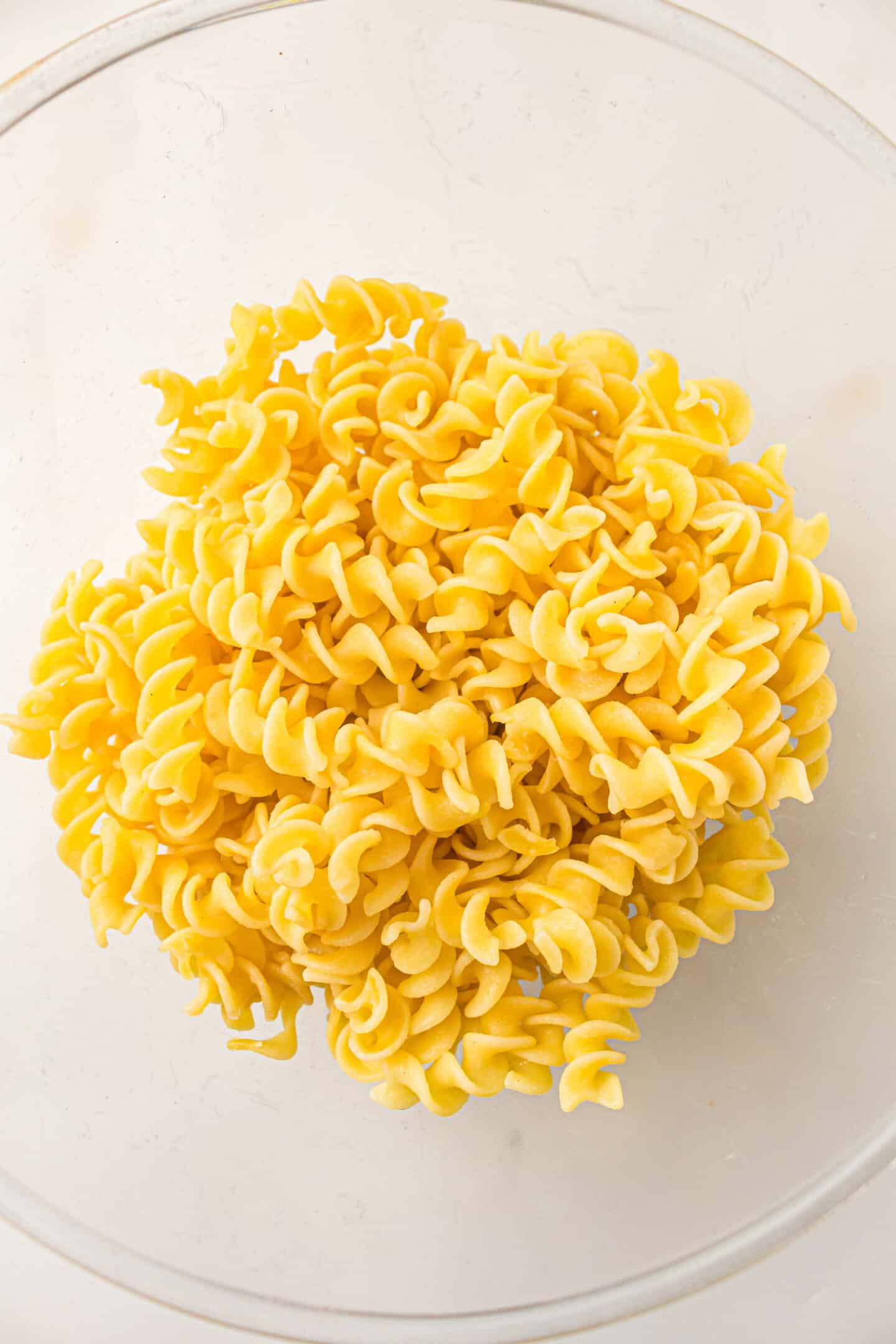
Step 1: Cook pasta in well-salted water according to package instructions. Drain and allow to cool completely.
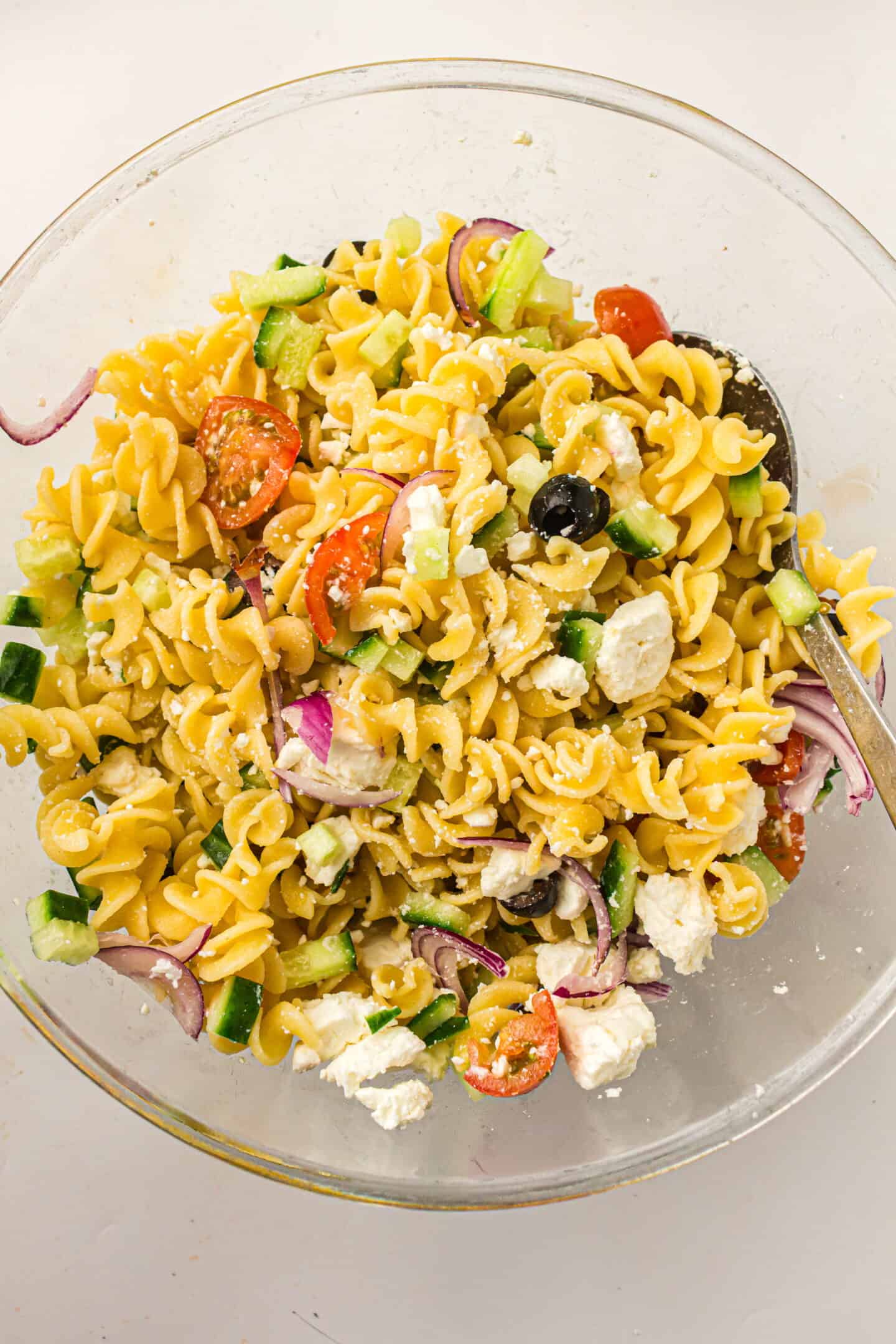
Step 2: In a large bowl, combine the cooked pasta, cherry tomatoes, cucumber, red onion, olives, and feta.
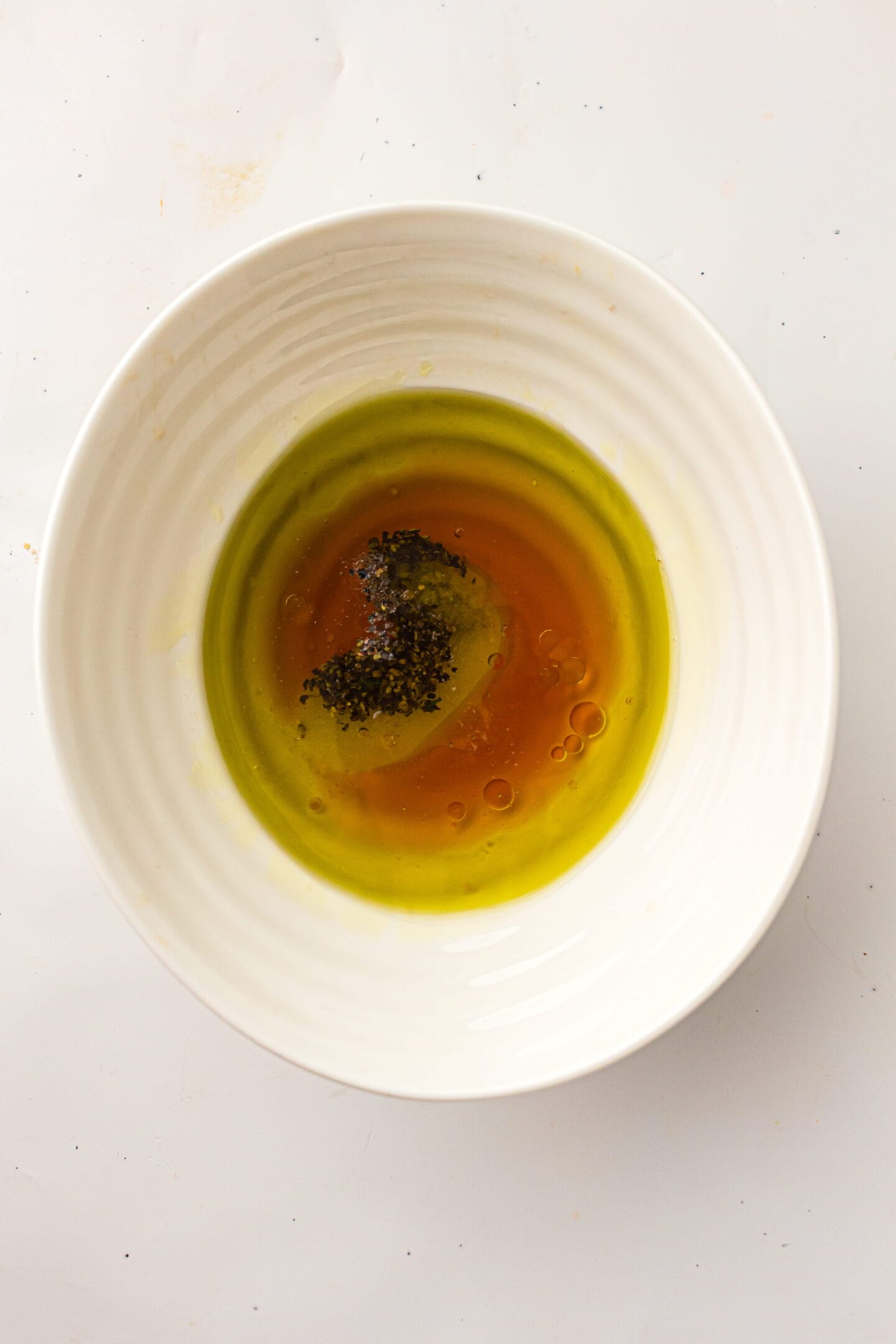
Step 3: In a small bowl, whisk together olive oil, red wine vinegar, salt, and black pepper.
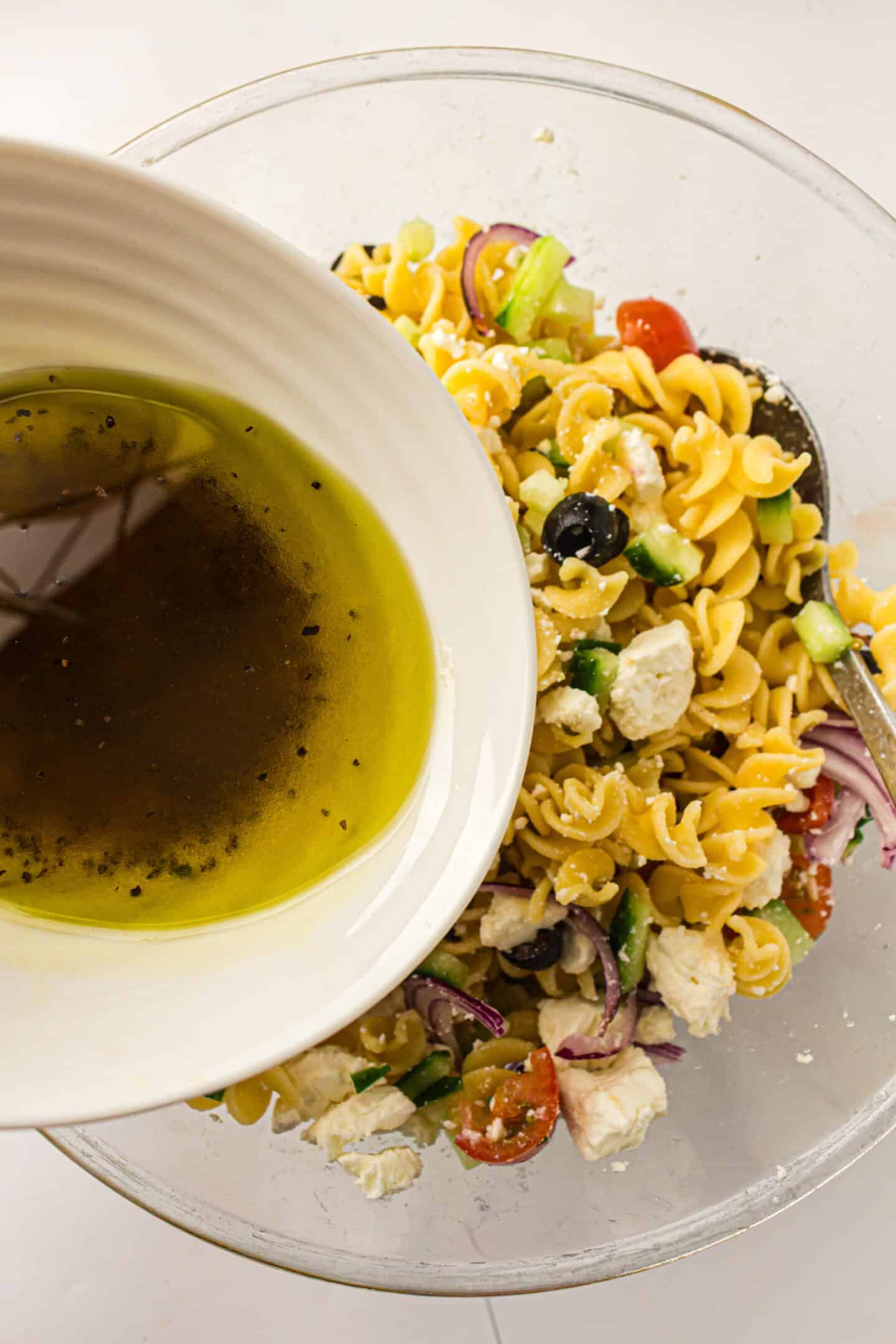
Step 4: Pour dressing over the salad and toss gently to combine.
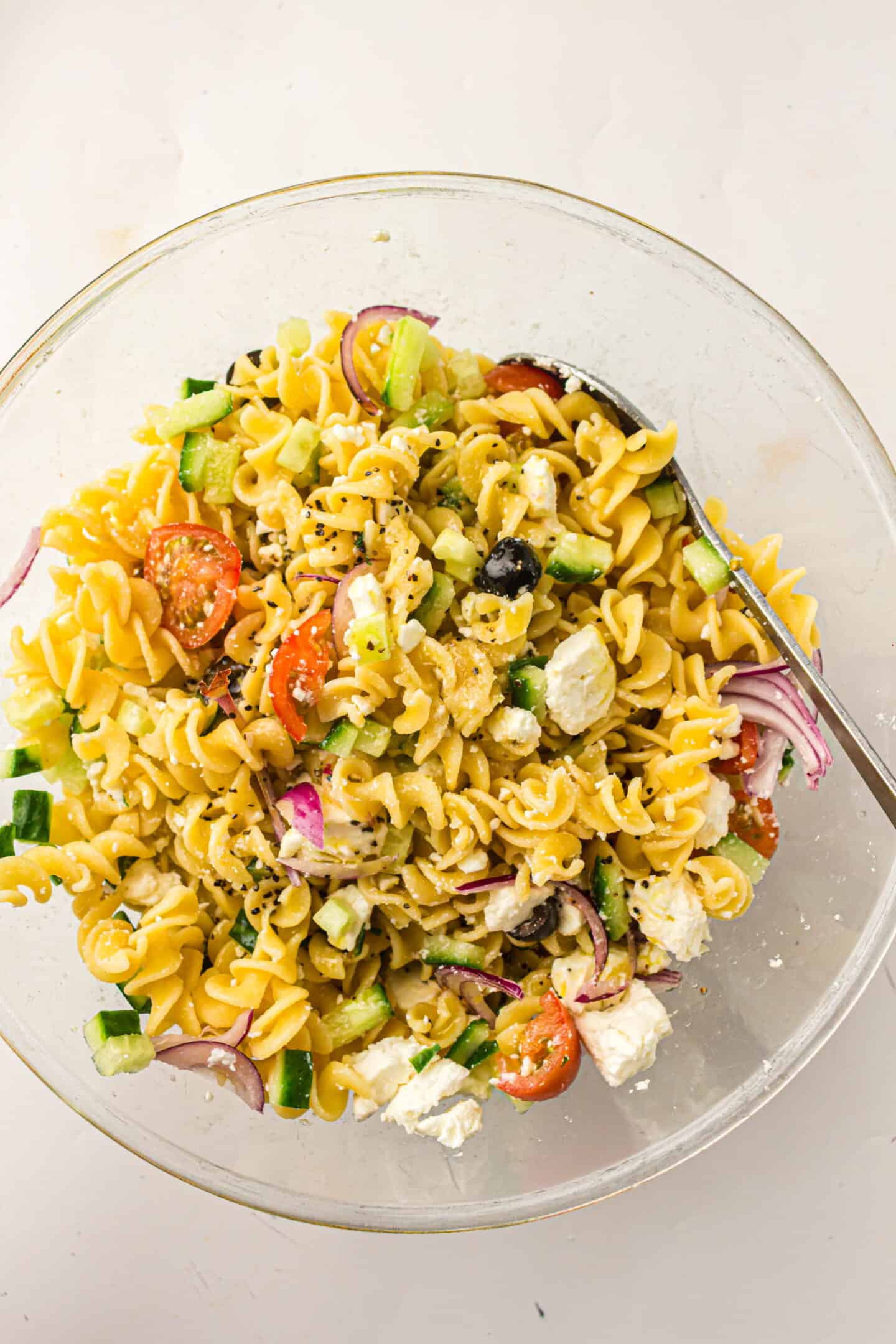
Step 5: Chill for at least 30 minutes before serving for best flavor.
Recipe Tips and Tricks
For best flavor, make ahead and let chill for a few hours before serving.
Stir before serving, as the dressing may settle in the fridge.
Add a splash of olive oil if the salad dries slightly while stored.
Make multiple servings and store in airtight containers for grab-and-go lunches.
Frequently Asked Questions
Yes! It tastes even better after chilling for a few hours.
Absolutely, any short pasta works well.
Yes, simply omit the feta or use a dairy-free alternative.
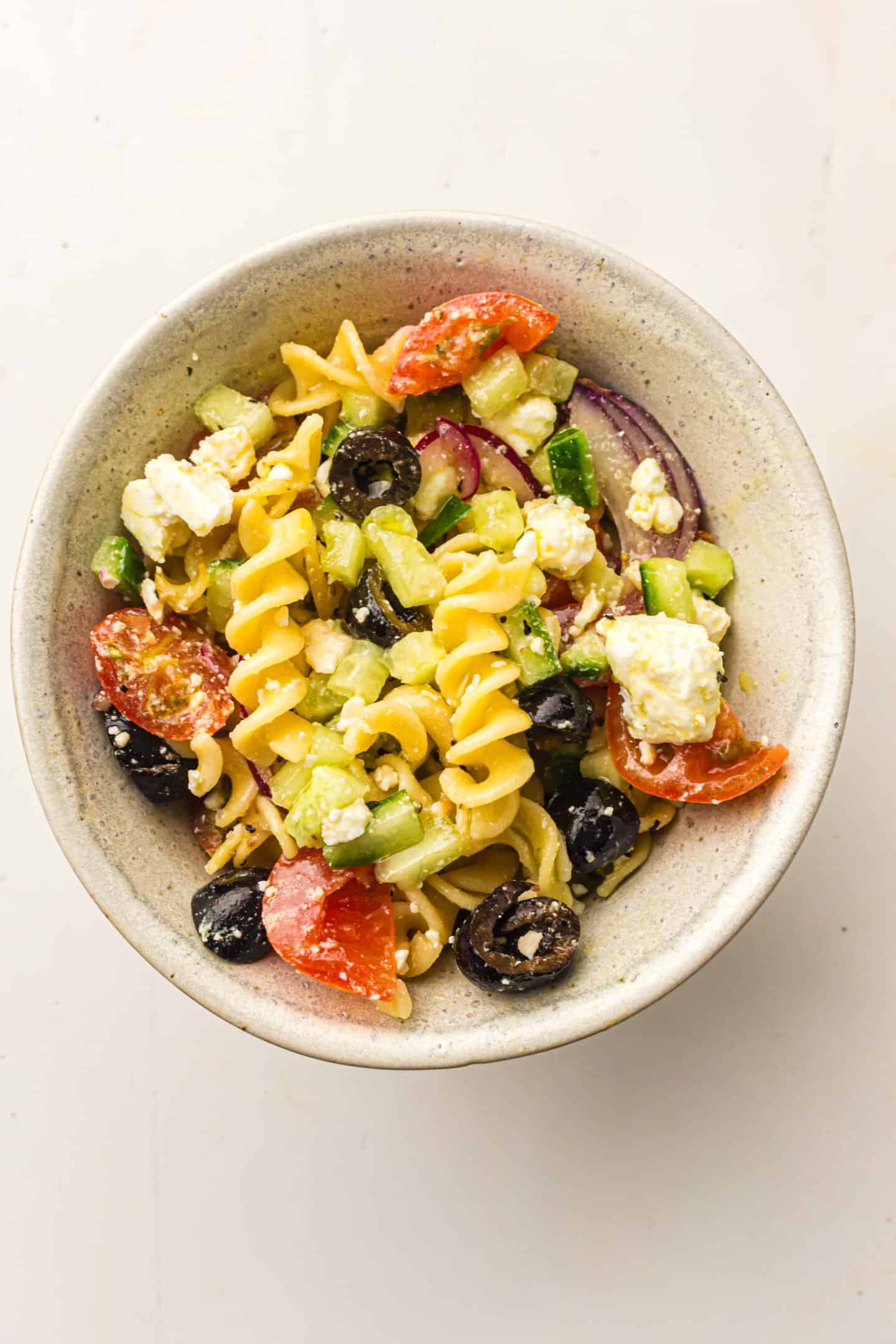
I hope you love this Greek pasta salad. Please consider leaving a star 🌟🌟🌟🌟🌟 rating in the recipe card below. Thank you so much!
More Salad Ideas
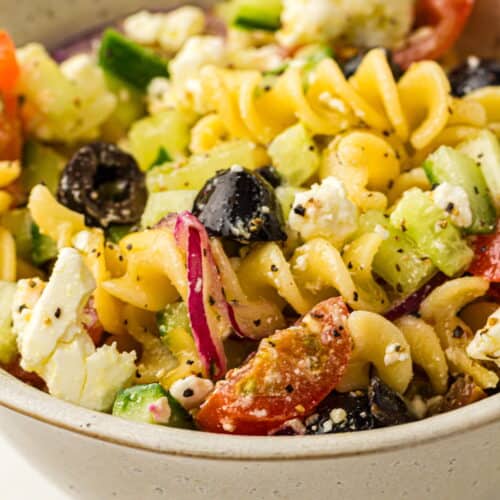
Greek Pasta Salad
Ingredients
- 10 oz 300 g short pasta (rotini or penne)
- 1 cup cherry tomatoes halved
- 1 large cucumber diced
- ½ small red onion thinly sliced
- ½ cup kalamata olives
- ¾ cup feta cheese crumbled
- ⅓ cup olive oil
- 2 tbsp red wine vinegar
- Salt and black pepper to taste
Instructions
- Cook pasta in well-salted water according to package instructions. Drain and allow to cool completely.
- In a large bowl, combine the cooked pasta, cherry tomatoes, cucumber, red onion, olives, and feta.
- In a small bowl, whisk together olive oil, red wine vinegar, salt, and black pepper.
- Pour dressing over the salad and toss gently to combine.
- Chill for at least 30 minutes before serving for best flavor.
The nutritional details for recipes are estimated using MyFitnessPal and can vary with different products, measurement accuracy, and source reliability. We aim to provide accurate information but cannot guarantee the precise accuracy of the nutritional data