
Sugar Coated Grapes
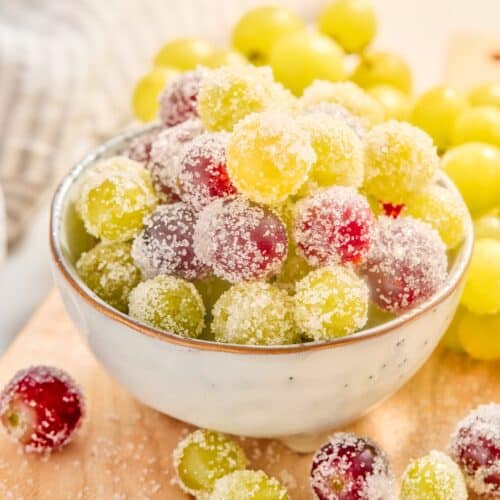
Sugar coated grapes are a simple candy-like treat made by dipping fresh grapes in a quick simple syrup, then rolling them in sugar until they’re fully coated. The syrup dries into a delicate, crackly shell that gives way to a juicy, cold grape underneath. This one is great for anyone who wants a fun, bite-sized sweet without turning on the oven.
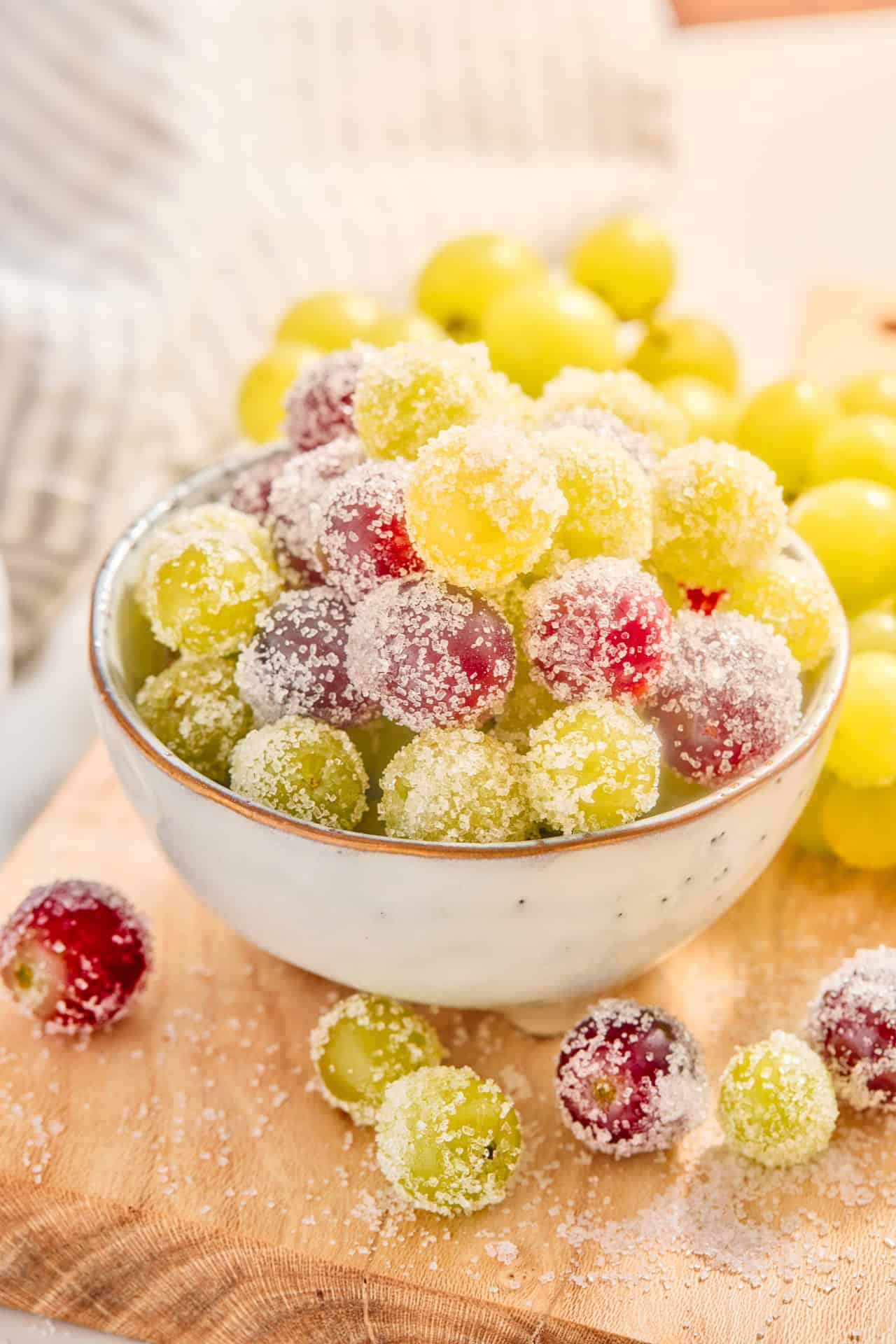
They’re a fun addition to a dessert table or a party spread, and kids especially love the sparkly, candy-coated look. The process takes a little patience for the drying and chilling steps, but the hands-on work is minimal. Once you’ve made a batch, you’ll have a naturally sweet treat that feels a bit more special than plain fruit.
For more easy fruit-based treats, be sure to try my Chocolate Covered Oranges, Chocolate Covered Pineapple, and Frozen Banana Snickers Bites. They’re all simple no-bake treats that make the most of fresh fruit.
What You’ll Love About This Recipe
Ingredients
You’ll need the following ingredients to make this Sugar Coated Grapes: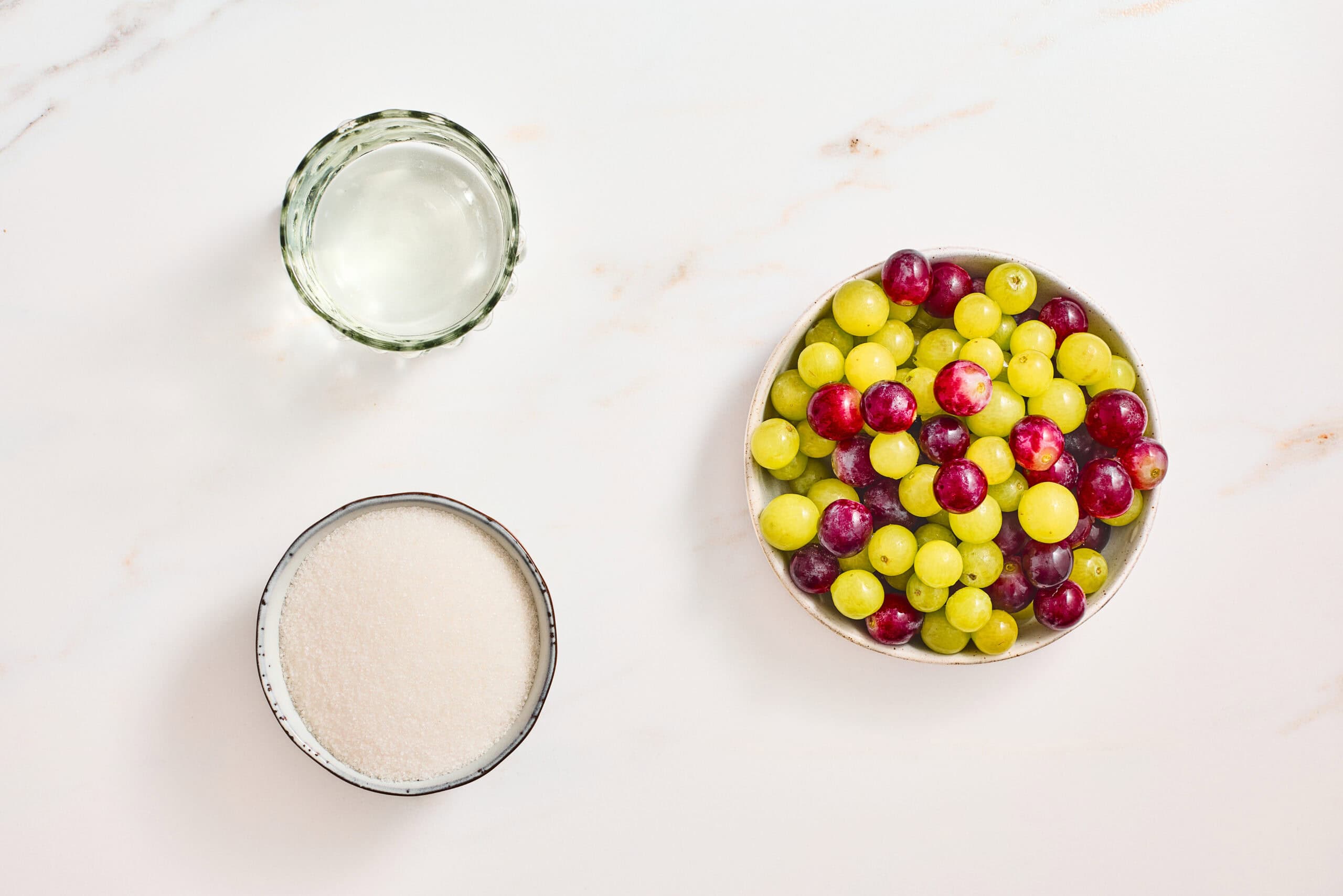
Ingredient Notes
Grapes: Use firm, unblemished grapes for the best texture. A mix of red and green grapes gives the best color contrast.
Sugar: Granulated sugar works for both the syrup and coating. Coarse sanding or sparkling sugar adds extra sparkle.
Water: Plain tap water is all you need to dissolve the sugar into a simple syrup.
Recipe Variations
Add Citrus or Extract: Flavor the syrup with lemon or orange zest, vanilla, or a few drops of almond extract.
Use Flavored or Colored Sugar: Try vanilla sugar, cinnamon sugar, or colored sanding sugar for a festive finish.
Try Another Fruit: Use the same method with blueberries or halved strawberries.
How To Make Sugar Coated Grapes: Step by Step
Here are quick visual instructions. Be sure to check out the full instructions with exact ingredients in the printable recipe card below.
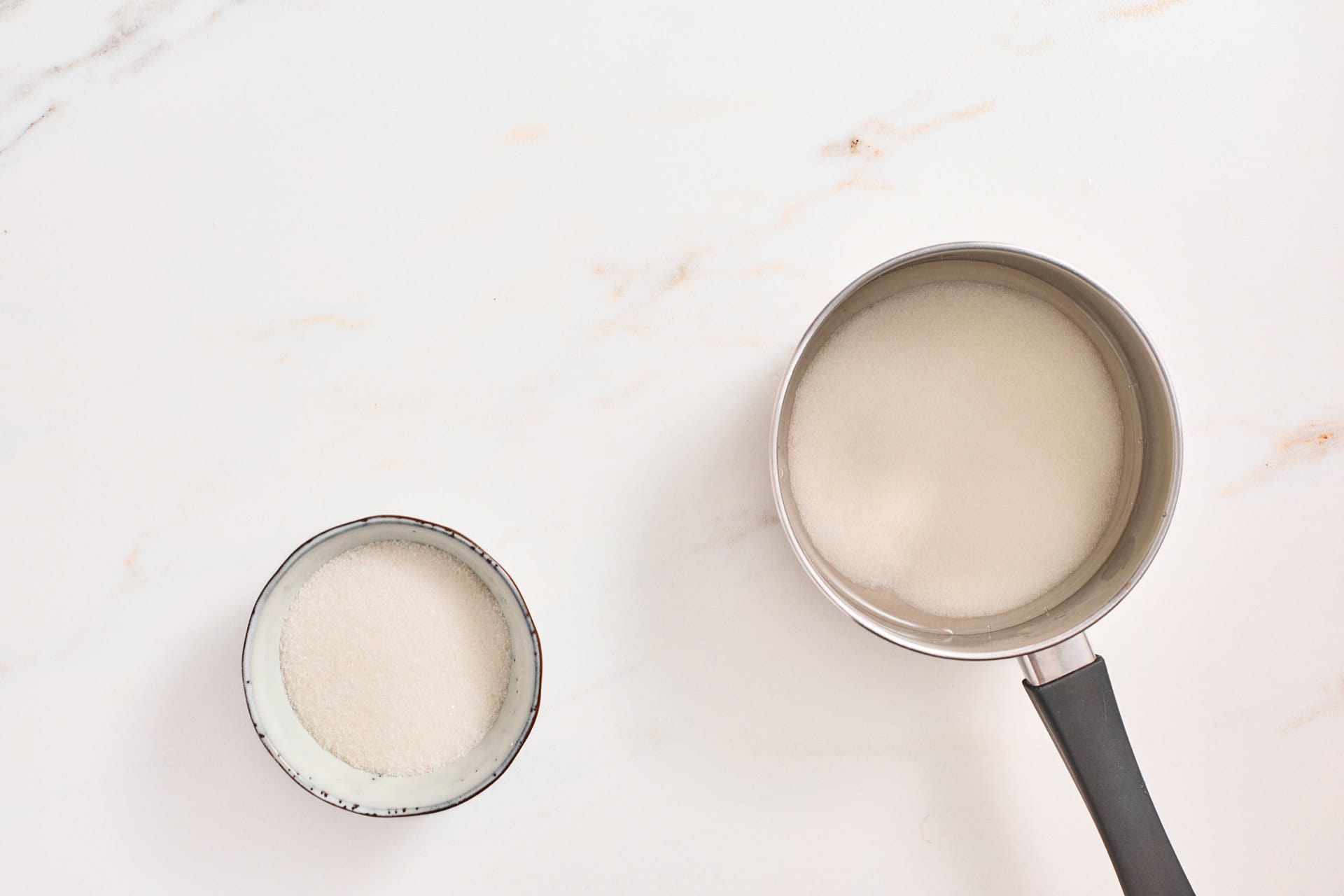
Step 1: Dissolve the sugar in water over medium heat to make a simple syrup.
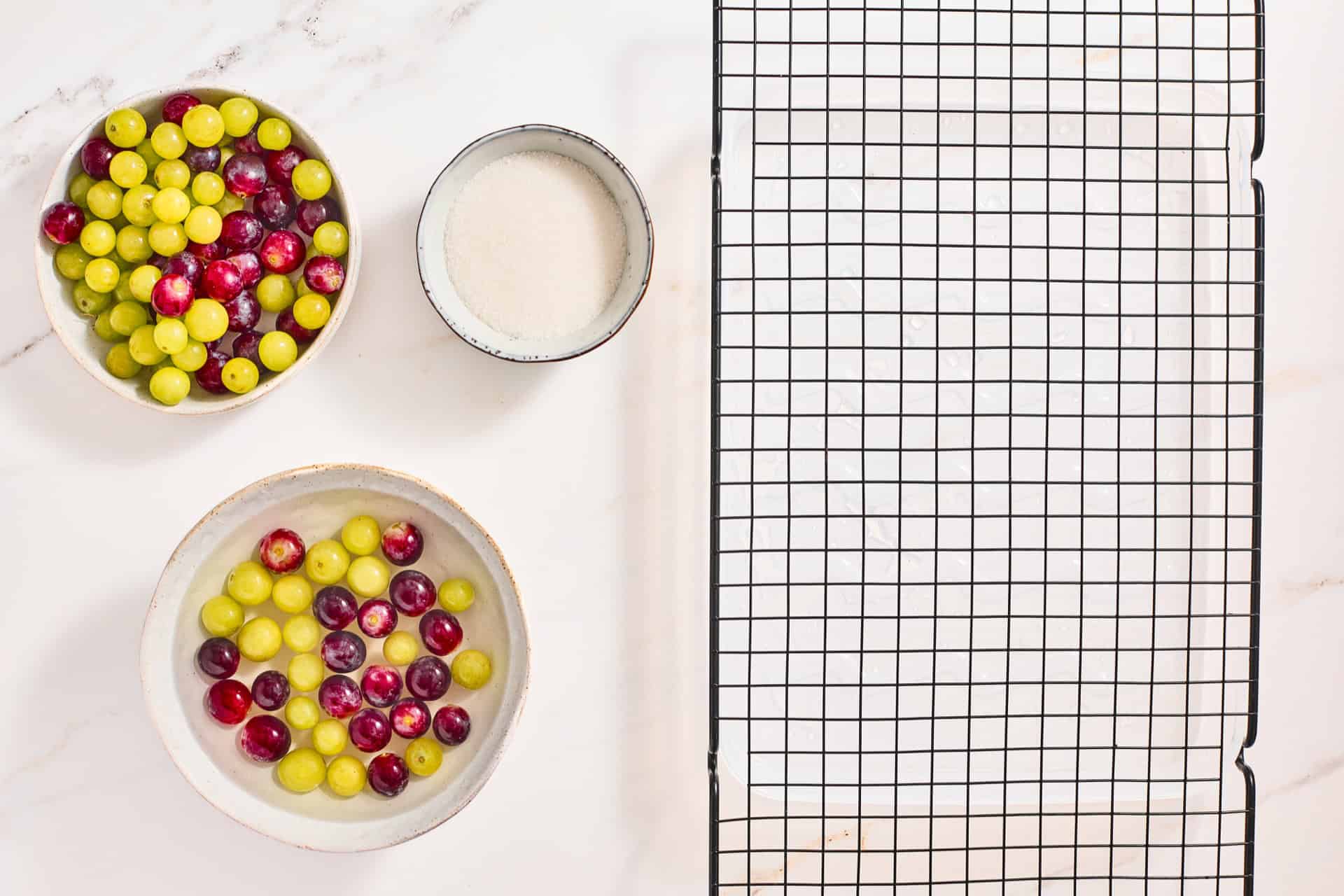
Step 2: Dip the grapes into the warm syrup until coated.
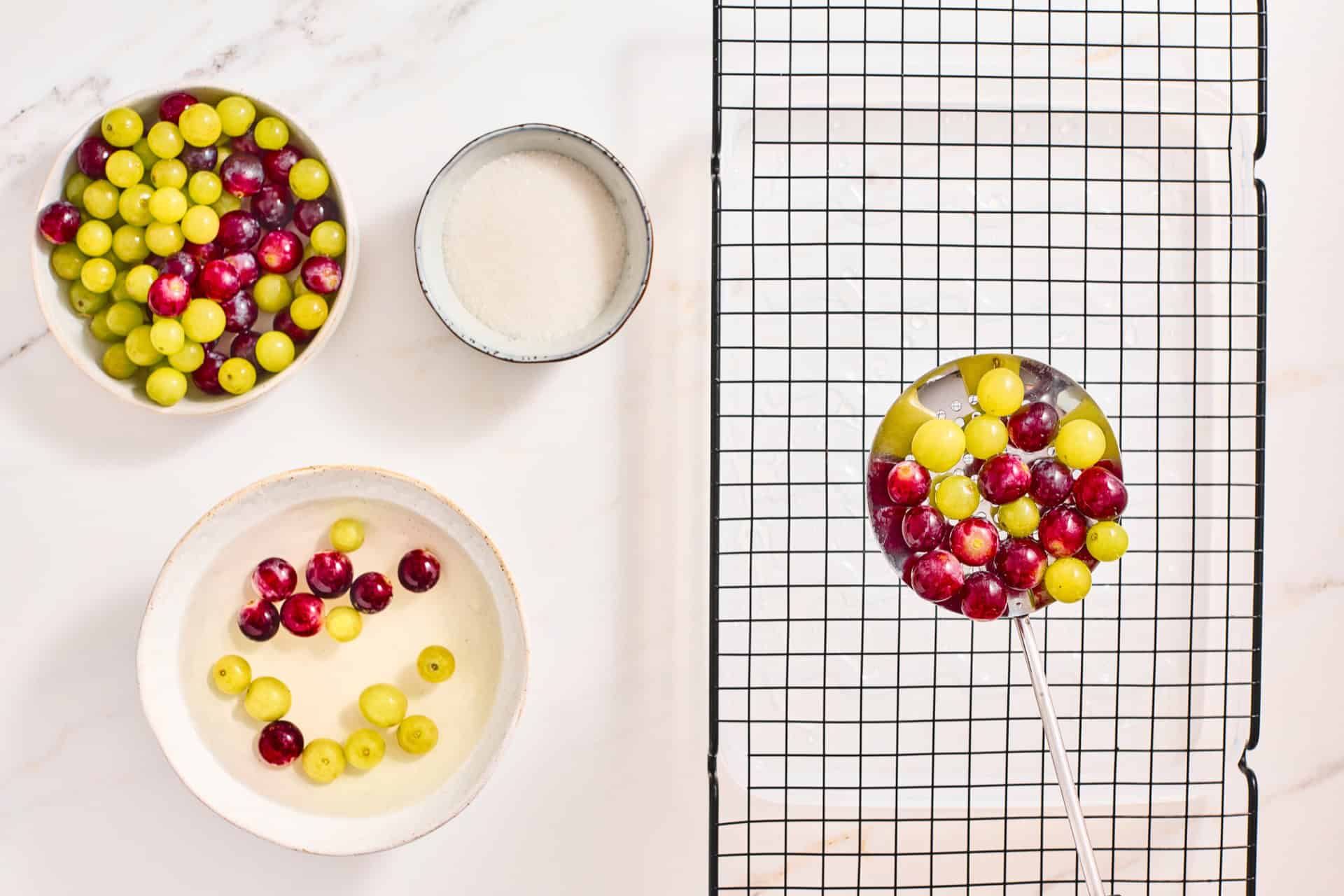
Step 3: Use a slotted spoon to transfer the coated grapes to a wire rack.
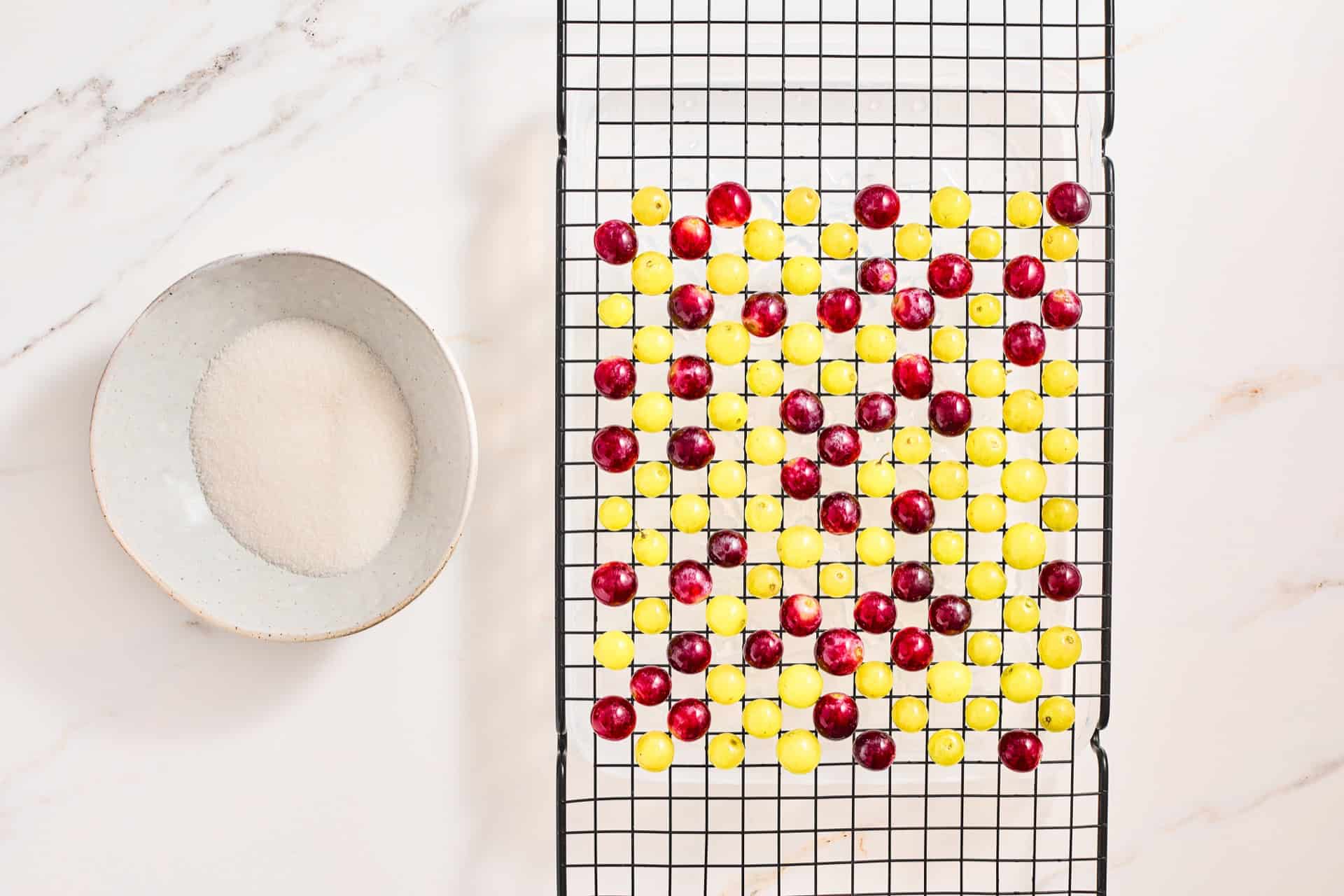
Step 4: Let the grapes dry on the rack until the surface is tacky.
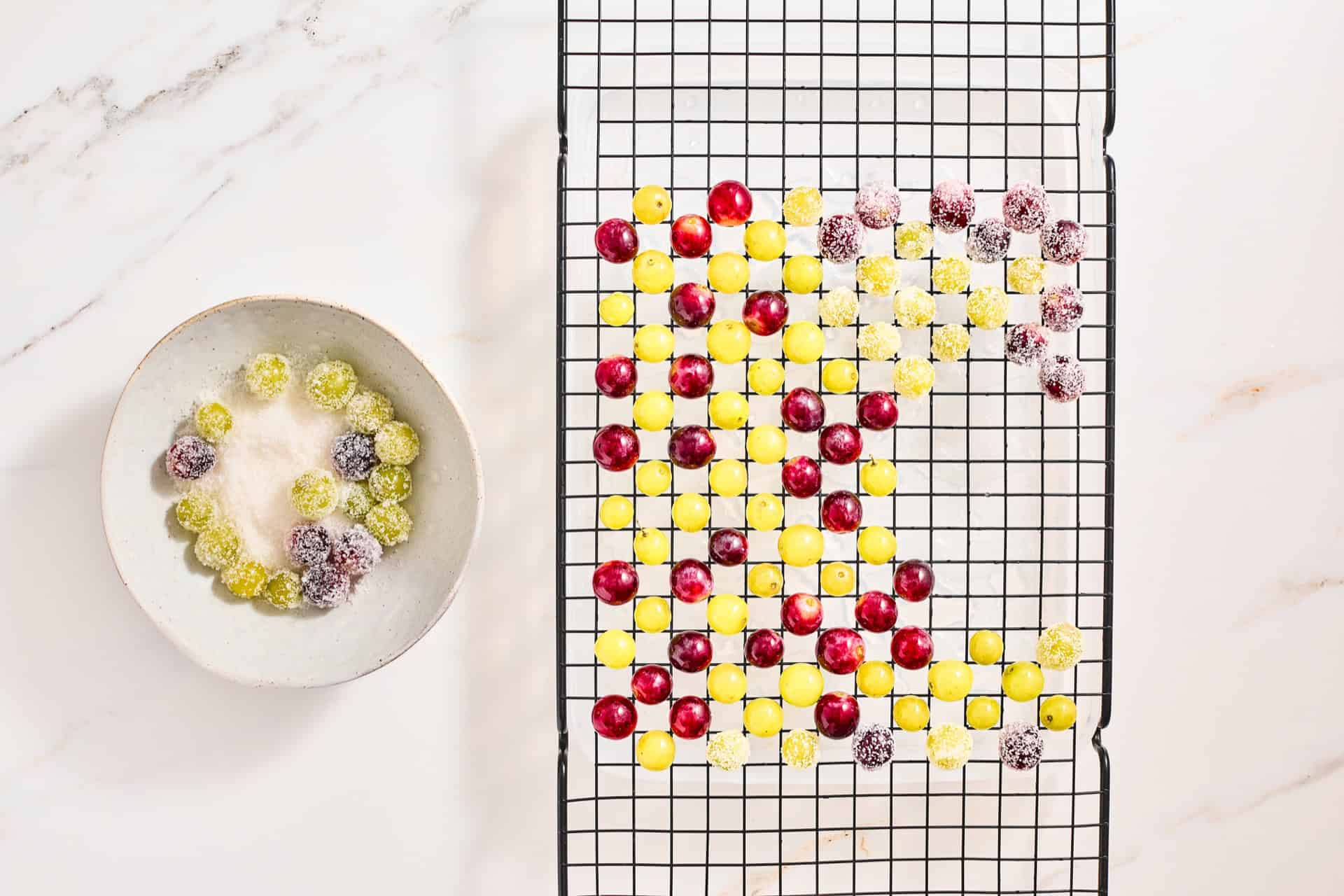
Step 5: Roll the tacky grapes in sugar until evenly coated.
Recipe Tips and Tricks
Pat the grapes completely dry before dipping, and work in small batches so the syrup stays warm and coats evenly.
Let the grapes become properly tacky before rolling in sugar, and dry them on a wire rack so air reaches every side.
Serve within 1-2 days because the sugar shell softens in the fridge; serve cold for the most refreshing bite.
Frequently Asked Questions
Fresh grapes work best. Frozen grapes release moisture as they thaw, which can prevent the syrup and sugar coating from setting properly.
They are best within 1-2 days. The sugar coating gradually softens and dissolves the longer the grapes sit in the refrigerator.
Yes. Use all red, all green, or any firm seedless grape variety you like.
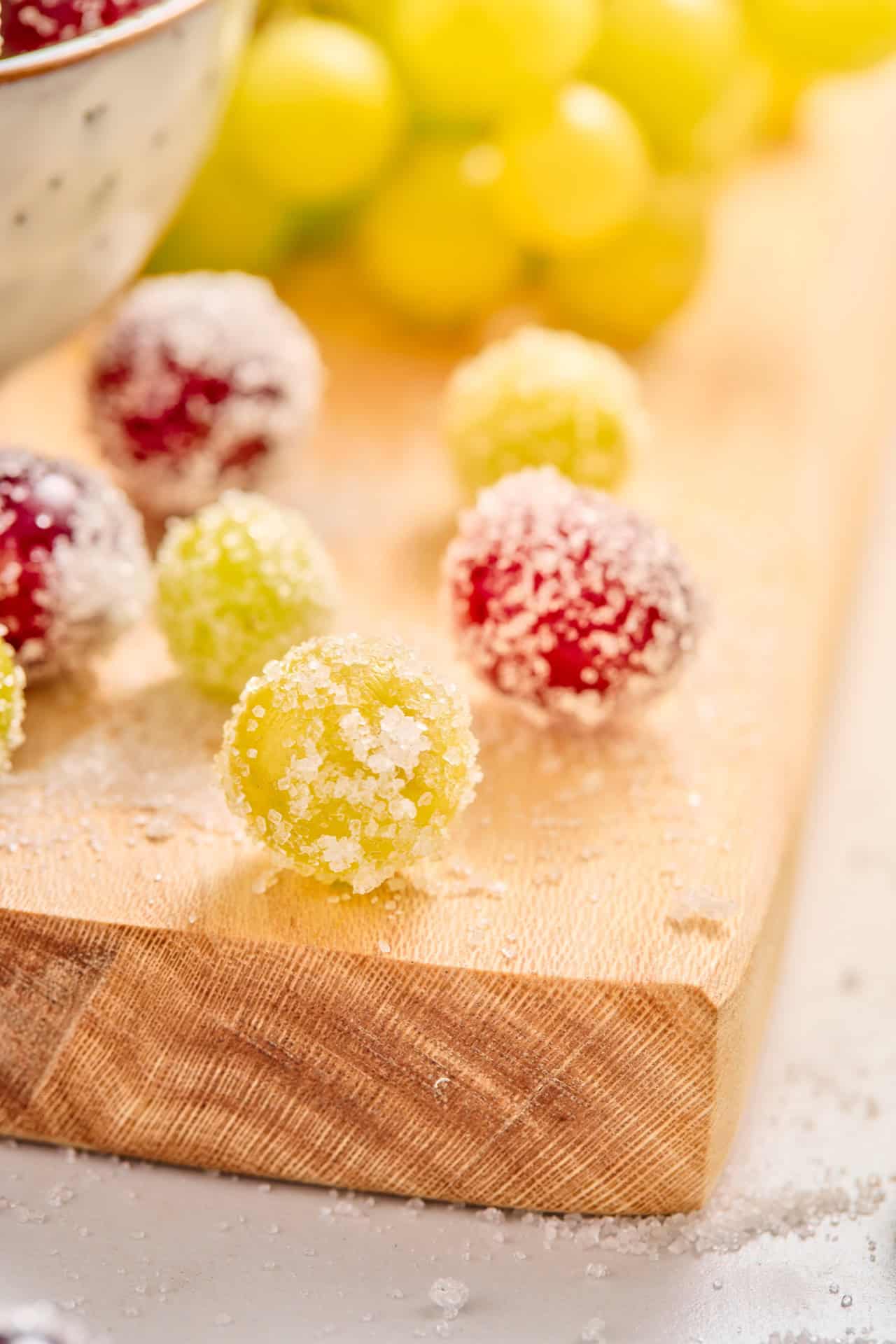
I hope you love this Sugar Coated Grapes. Please consider leaving a star 🌟🌟🌟🌟🌟 rating in the recipe card below. Thank you so much!
More Recipes To Try
Sugar Coated Grapes
Ingredients
- 1 lb grapes 500 g, red and green
- 3/4 cup plus 1 tablespoon water 200 ml
- 1 1/4 cups sugar 250 g, plus extra for coating
Instructions
- In a small saucepan, combine the water and 1 1/4 cups (250 g) of sugar. Heat over medium heat, stirring occasionally, until the sugar fully dissolves and a simple syrup forms.
- Remove the syrup from the heat. Dip the grapes into the syrup until they are well coated.
- Using a slotted spoon, carefully transfer the coated grapes onto a wire rack.
- Allow the grapes to dry for about 30 minutes. This creates a tacky surface for the sugar to adhere to.
- Roll the tacky grapes in the extra sugar until they are fully and evenly coated.
- Place the grapes in the refrigerator and chill until the coating is set and firm.
Notes
The nutritional details for recipes are estimated using MyFitnessPal and can vary with different products, measurement accuracy, and source reliability. We aim to provide accurate information but cannot guarantee the precise accuracy of the nutritional data